
How to Segment Inactive Salon Customers for Return Visits
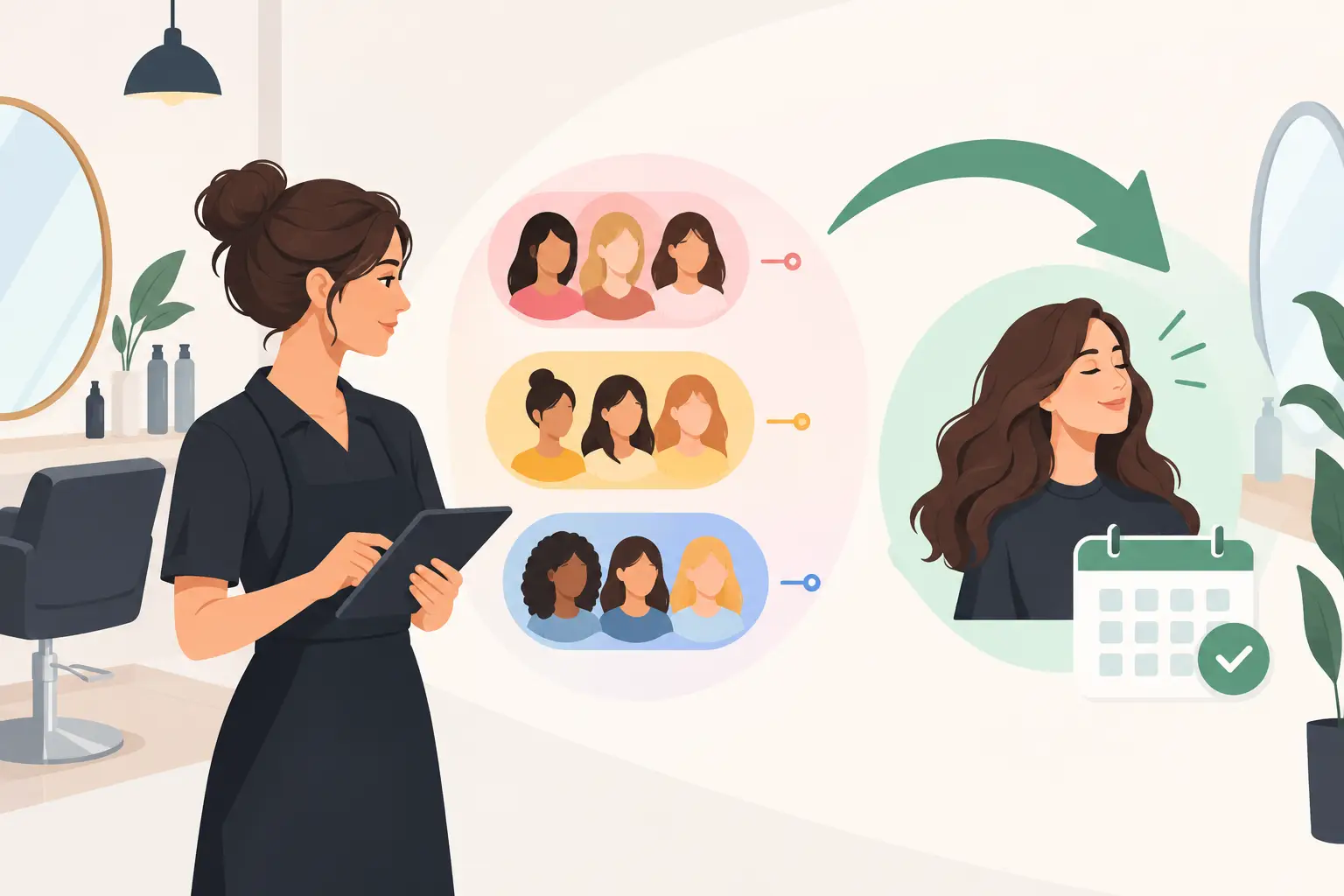
A client who has not booked in six months is not the same as a first-time guest who never returned. Treating both people as part of one generic rebooking list wastes marketing budget and can make your outreach feel irrelevant. When you segment inactive salon customers, you can match the message, offer, and timing to the reason they may have stopped coming in.
For a salon, inactive customers represent more than empty appointment slots. They are people whose preferences, service history, spending patterns, and past relationships with your team already exist in your CRM. That makes reactivation more efficient than starting every month with a search for new clients. The key is to organize that data into usable groups, then build campaigns your front desk and team can actually manage.
Define what inactive means for your salon
There is no universal inactivity window. A haircut client who normally visits every five weeks should be considered inactive much sooner than a client who books color services twice a year. Start with the natural appointment cycle for each service, not an arbitrary number of days.
A practical approach is to set inactivity thresholds by service category. For example, a client may be considered overdue after eight to 10 weeks for haircuts, 12 to 16 weeks for lashes or nails, and six to nine months for major color services. Your actual ranges should reflect the behavior in your own appointment data.
Avoid labeling every client outside a standard 90-day window as inactive. That can put occasional but loyal guests into the wrong campaign. Instead, use appointment history to identify clients who are late compared with their usual booking rhythm.
Segment inactive salon customers by the signals that matter
A useful segment has a clear purpose. It tells you why a group matters and what action you want them to take next. Start with a few high-value segments that your salon can contact consistently rather than creating dozens of narrow lists no one uses.
Recently lapsed regulars
These are clients who visited frequently in the past but have missed their normal return date by a few weeks or months. They know your salon, likely have a preferred provider, and may simply need a prompt to book.
This is often the highest-priority reactivation group because the relationship is still relatively warm. A short, personal message works well: mention that it is time to refresh their cut, color, or treatment, and make it easy to select an appointment with the same staff member. A large discount is usually unnecessary at this stage. Convenience and familiarity are stronger motivators.
High-value clients who have gone quiet
Separate clients by lifetime spend, average ticket, package history, or premium service usage. A guest who previously booked balayage, extensions, spa packages, or recurring clinical treatments deserves a different follow-up from someone who visited once for a basic service.
These clients may be less price-sensitive, but they expect relevant communication. Lead with continuity of care, a consultation, a seasonal service recommendation, or priority access to a sought-after provider. If an offer is appropriate, consider value-added options such as a complimentary add-on rather than reducing the core service price.
First-time guests who never returned
A first appointment does not always become a client relationship. This group is worth segmenting because the cause of inactivity may be different: they may not have been asked to rebook, had trouble finding their preferred time, or simply did not see a reason to return.
Send a welcome-back campaign that feels helpful rather than demanding. You might reference the service they tried and invite them to book their next maintenance visit. If your data shows that many first-time clients disappear after a particular service or provider, review the in-salon rebooking process as well. Marketing can prompt a return, but it cannot fully fix a poor handoff at checkout.
Clients affected by staff changes
When a stylist, therapist, or technician leaves, their clients can become inactive quickly. Segment these customers separately and communicate with care. They may feel that their relationship was with the individual provider, not the salon.
Let them know who can support them next, based on service specialty and availability. A clear transition message, paired with a simple booking option, is more effective than dropping them into a broad promotional campaign. This segment also helps protect revenue during staffing changes, when schedule gaps can appear across the business.
Seasonal and occasional clients
Some clients are not inactive at all. They only book before vacations, holidays, weddings, school events, or changes in season. Their past booking dates can reveal this pattern.
For this group, timing matters more than frequency. A color refresh reminder before summer, a holiday spa campaign, or a pre-event beauty message can outperform a generic "we miss you" email. Segmenting seasonal behavior prevents your salon from contacting clients too early and gives your campaigns a more natural reason to arrive.
Use client data without overcomplicating the process
You do not need a data team to build effective reactivation segments. Most salons can begin with information already captured through online booking, checkout, and client notes: last appointment date, services booked, preferred staff member, total spend, visit frequency, cancellations, and communication preferences.
A centralized platform such as CleverBooking makes this easier because appointment history, CRM activity, campaigns, payments, and reporting live in one operating dashboard. The goal is not to collect data for its own sake. It is to give the team a clear view of who should be contacted and why.
Start by reviewing your inactive list once each month. Look for gaps in bookings by service, provider, and client type. If a stylist has open color appointments next month, a segment of overdue color clients is more useful than a salon-wide discount sent to everyone.
Be disciplined about data quality. Staff should select services accurately, maintain client notes, and update contact permissions at every appropriate opportunity. If a client record says only "appointment" with no service detail, it becomes much harder to send a relevant reminder later.
Match the campaign to the segment
The best reactivation campaigns are specific, timely, and easy to act on. A client should understand why they are receiving the message and what appointment to book within a few seconds.
For recently lapsed regulars, focus on their normal routine: "Ready for your next trim? Your preferred stylist has appointments available this month." For a high-value color client, a better message may be: "It may be time for a color refresh. Book a consultation or reserve your next color appointment with your usual specialist."
Keep promotional pressure proportional to the relationship. A small incentive can help reactivate a client who has been away for a year, but routinely discounting for anyone who waits to book trains customers to delay. Use offers selectively, set a clear expiration date, and measure whether clients return again after the offer rather than judging success only by the first redeemed appointment.
Choose the channel based on consent and client behavior. Email gives you room to include service details and booking options. Text messages are useful for short reminders and limited availability, but they require restraint. Too many texts can turn a useful prompt into a reason to opt out.
Measure return quality, not just campaign opens
Open rates and clicks can help you assess subject lines and message timing, but they do not tell you whether the campaign improved the business. Track booked appointments, completed visits, revenue, average ticket, and the percentage of reactivated clients who return again within the next expected service cycle.
Compare results across segments. You may find that a no-discount reminder brings back regular haircut clients, while first-time guests respond better to a consultation offer. You may also discover that a particular provider's clients are not returning at the same rate as others. That is an operational signal worth discussing, not just a marketing metric.
Give each campaign enough time to produce bookings, then refine it. If a group does not respond, revisit the segment definition before increasing the discount. The problem may be poor timing, an outdated contact list, a service mismatch, or limited appointment availability.
A well-organized inactive customer strategy gives your salon a more reliable way to fill the schedule without treating every empty slot as an emergency. Start with one segment, send a message that fits its history, and let the results show you where your next return visit is most likely to come from.